
Building AI You Can Trust
by Mohamed El Deep, Machine Learning Product Manager
Key Takeaways
-
AI capability and AI reliability are two separate qualities. In electronics, where lifecycle status, availability, and compliance requirements change continuously, the data behind an AI response determines its practical value.
-
Trustworthy AI in electronics is defined by three architectural commitments: grounding in a continuously refreshed verified database, traceability that connects every answer to its source, and guardrails that enforce the boundaries of verified data.
-
essie is grounded in SiliconExpert’s curated electronics database, refreshed continuously across lifecycle, availability, and compliance data, ensuring every response reflects current, decision-ready intelligence.
-
As AI becomes agentic, moving from answering questions into taking action, the quality of the underlying data becomes the defining factor in whether automated decisions are defensible.
-
Data protection is built into essie’s architecture. Part lists, BOMs, sourcing strategies, and engineering decisions remain within the organization’s control, handled securely within SiliconExpert’s governed environment.
The AI capabilities available to electronics supply chain teams today represent a genuine operational shift. Systems that continuously monitor global events, surface prioritized disruption alerts, explain multidimensional risk in plain language, and embed contextual guidance directly within engineering and sourcing workflows are making the difference between reacting to disruptions and preventing them.
That progress raises a natural and important question:
When AI is surfacing the alerts that drive sourcing decisions, explaining risk at the component level, and guiding teams from analysis to action, how do you know you can trust the answer?
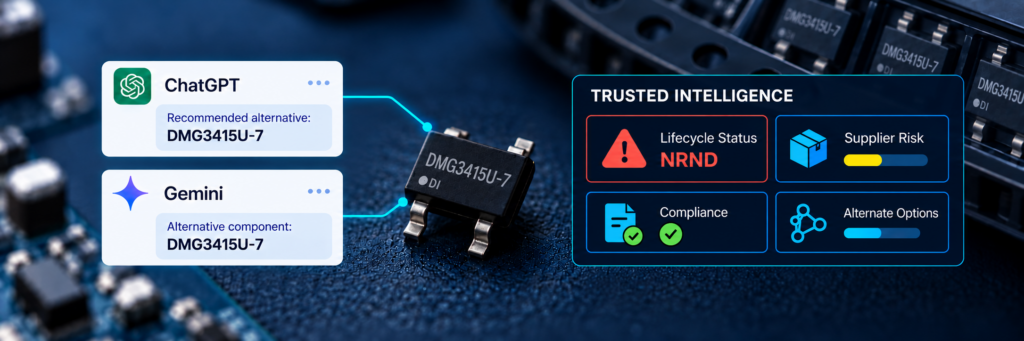
The question carries more weight in electronics than in almost any other domain. Components reach end-of-life. Datasheets get updated. Supply chains shift. Compliance requirements change. New risks appear.
In this environment, the capability of an AI system and the reliability of its outputs are two separate qualities. Capability determines what AI can do. The data behind it determines whether any of it is worth acting on.
Demanding More of AI
AI is remarkably good at understanding what you are asking. In electronics, it must do more if it’s to be reliably leveraged in a meaningful way. In this notoriously volatile industry, knowing what is true right now is a non-negotiable requirement.
Each change in the electronics landscape (a component moving toward end-of-life, a supplier constraint emerging, a compliance regulation updating) can make a previously accurate answer obsolete. The recency and accuracy of underlying data determine whether an AI response is useful in practice.
Building AI for electronics means connecting intelligence to information you can trust. Confidence in AI output comes from knowing which sources are feeding results.
What Makes AI Trustworthy?
The most valuable AI knows where to find the right information.
When AI is connected to trusted, up-to-date electronics intelligence, it retrieves verified information, reasons over it, and presents it in a way that is easy to understand. The experience remains conversational, and every answer rests on a verifiable foundation.
Every answer rests on a verifiable foundation.
Recommendations reflect current lifecycle information. Alternative parts are evaluated using trusted electronics intelligence. Answers point back to their sources, giving teams the ability to verify every recommendation.
As AI becomes agentic, that foundation grows more important. An agent that moves from simply retrieving information to performing tasks is only as reliable as the information it acts on. Trustworthy data is what makes every action defensible.
Data protection is just as critical, if not more so. BOMs, sourcing strategies, and engineering decisions represent valuable intellectual property. The imperative is for teams working with enterprise AI remains information security, always keeping it within the organization’s control.
Trust is architected into the system from the very beginning to make a viable, scalable AI infrastructure in high-stakes engineering and supply chain environments.
Where Trusted Intelligence Meets
Operational AI
SiliconExpert’s premier intelligence and agentic AI was developed to drive resilient supply chains in line with our strictest ISO-certified standards. The outcome supports the real-world needs of organizations today, and what they are going to require to stay competitive into the future.
essie infuses the power and speed of AI atop decades of maintained and validated electronics data, bringing both together in a single strategic advantage, combining the conversational experience people expect from modern AI, with the trusted information that engineering and supply chain teams rely on every day.
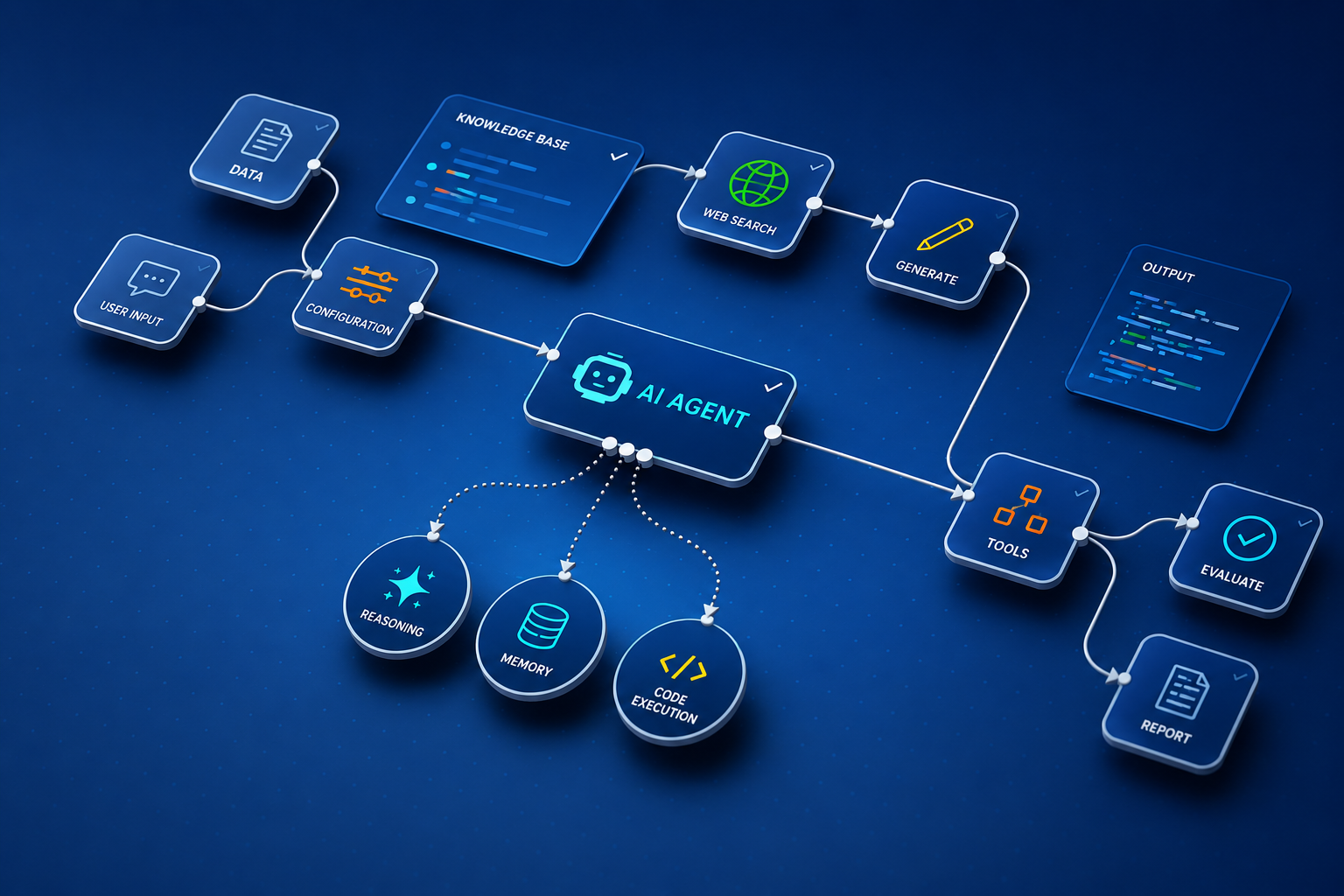
Ask a question in plain language, and essie does more than generate an answer. As an agentic AI, essie plans how to respond, selects the right specialized tools, retrieves trusted information, reasons over it with built-in guardrails, and delivers responses that are transparent, explainable, and grounded in SiliconExpert’s electronics intelligence.
These commitments are what make the capabilities SiliconExpert’s AI delivers genuinely reliable. When essie surfaces an Urgent Event Notification, the prioritization behind that alert is grounded in verified supply chain data. When SCRM Intelligence explains the risk behind a component and recommends mitigation strategies, those outputs are traceable to the sources that produced them. When essie responds to a plain-language question, guardrails ensure the response stays within the boundaries of what the data can support.
Trust is built into the architecture, starting with grounding. Every response is retrieved from SiliconExpert’s curated electronics database, refreshed continuously as lifecycles, availability, and compliance requirements change. It continues with traceability: Answers point back to the data behind them, giving teams the ability to verify every recommendation. Guardrails complete the picture. essie works within the boundaries of verified data.
Responses are delivered only when the data supports them, so confidence is always earned. The result is an experience that feels as natural as talking to a colleague, with the confidence needed to make real engineering and supply chain decisions. Trusted data, made accessible and actionable, is the foundation of AI from SiliconExpert, and the starting point for every confident supply chain decision that follows.
Quick Reference: essie Trust Architecture
|
Architectural Pillar |
What It Delivers |
|
Grounding |
Every essie response is retrieved from SiliconExpert’s continuously refreshed electronics database, spanning lifecycle status, availability, compliance, cross-references, and supplier data, ensuring every output reflects current, verified intelligence |
|
Traceability |
Every answer is connected back to the verified data source that produced it, giving engineering and supply chain teams the ability to validate any recommendation before acting on it |
|
Guardrails |
essie operates within the boundaries of verified data; responses are delivered only when the data supports them, so every output represents earned confidence |
|
Data Privacy |
essie is designed with enterprise-grade security and governance in mind, ensuring that all information remains protected, controlled, and contained within SiliconExpert’s trusted environment. |
Want to see how trusted intelligence becomes guided action?
Join our upcoming webinar, Guided Intelligence: Transforming Electronics Supply Chain Decisions with AI, to learn how AI, curated data, and domain expertise can help teams move from fragmented information to faster, more confident supply chain decisions.