Component obsolescence occurs when electronic parts reach end-of-life and are no longer manufactured or supported, increasing sourcing risk and redesign costs.
OBSOLESCENCE IS PREDICTABLE
Obsolescence is rarely sudden.
It develops over time through supply shifts, sustained demand, and supplier prioritization changes.
THE PATTERN
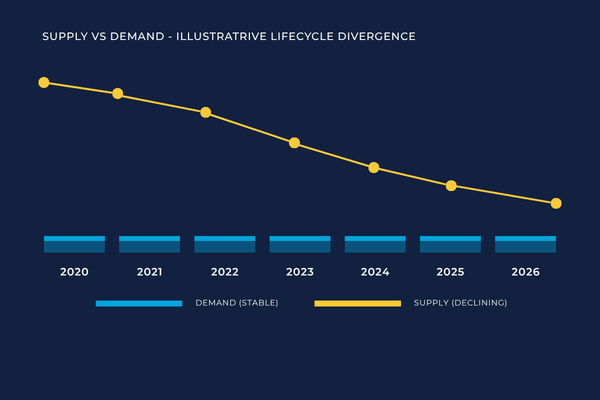
Demand remains steady while supply declines—creating increasing constraint and risk.
WHY TEAMS REACT TOO LATE
Teams rely on PCNs and LTB alerts that confirm change—but leave little time to act.
By the time an official notice arrives, the window for proactive response has already closed.
Supply already tightening
By the time you receive a PCN, inventory is already constrained in the channel.
Supply already tightening
By the time you receive a PCN, inventory is already constrained in the channel.
Supply already tightening
By the time you receive a PCN, inventory is already constrained in the channel.
Analyze component obsolescence risk across your BOM before disruption.