

Late on December 8, 2025, a strong earthquake — initially measured between magnitude 7.5 and 7.6 — struck off the northeastern coast of Japan near Aomori Prefecture, sending intense shaking across wide areas and triggering tsunami warnings for multiple coastal regions including Hokkaido, Aomori, and Iwate.
The tremor was felt deeply within communities, registering as an “upper 6” on Japan’s seismic intensity scale in Hachinohe city and leading to temporary disruption of rail services and power outages. Authorities swiftly evacuated more than 90,000 residents as a precaution against potential tsunami surges.
Tsunami Observations and Government Response
Though the Japan Meteorological Agency initially warned of tsunami waves as high as 3 meters, observed waves were much smaller — generally 20–70 cm at several ports along the Pacific coastline, and all warnings were eventually downgraded to advisories and then lifted.
Local emergency teams activated their disaster response plans, conducting structural safety checks and assessing damage across affected prefectures. As of the latest reports, 30+ people were treated for injuries, mostly from falling objects or during evacuation efforts, and no major infrastructure failures — including at nearby nuclear power facilities — were confirmed.
Looking Ahead: Aftershocks and “Megaquake” Alerts
Japan’s weather agency has issued an increased alert for potential large aftershocks and even a “megaquake” — defined as magnitude 8.0 or higher — in the coming days due to heightened seismic activity in regional subduction zones. Citizens and disaster preparedness organizations are urged to remain vigilant and ready for further tremors.
Why This Matters for Global Supply Chains
Natural disasters like significant earthquakes and tsunamis can have far-reaching impacts beyond the immediate affected regions. For companies with complex, global supply networks — especially those connected to automotive, electronics, industrial, or consumer technology manufacturing — seismic events in Japan can disrupt production, logistics, and vendor operations.
Understanding the downstream effects of supply chain disruptions is crucial for risk management and continuity planning. Japan is a critical manufacturing hub for automotive, electronics, and industrial components. Even moderate earthquakes can lead to:
- Temporary factory shutdowns
- Logistics delays
- Component shortages
- Extended lead times due to infrastructure inspection or port disruptions
- The full scope of the downstream impact is not yet known, but initial assessments and historical evidence provide critical reference points to inform resilient response strategies.
The severity of this event matches the 7.5 magnitude earthquake that struck the Noto peninsula in January 2024, which resulted in closures of some factory sites continuing for many months, with common mode choke coils not returning to methodical production until May of that year.
For companies relying on precision electronics, capacitors, semiconductors, and other components sourced from Japan, understanding which suppliers are in the affected region becomes essential for immediate risk evaluation.

Stay Ahead of Supply Chain Risks with SiliconExpert
Natural disasters can ripple quickly through the global supply chain, but with the right tools, you can stay ahead of the impact.
SiliconExpert’s Supply Chain Risk Management solution helps you:
- Monitor real-time disruptions like earthquakes, natural disasters, geopolitical events, and facility shutdowns
- Identify which of your specific parts are tied to manufacturing sites in affected regions
- Assess supplier vulnerability instantly
- Reduce costs by taking proactive action to mitigate downstream risk
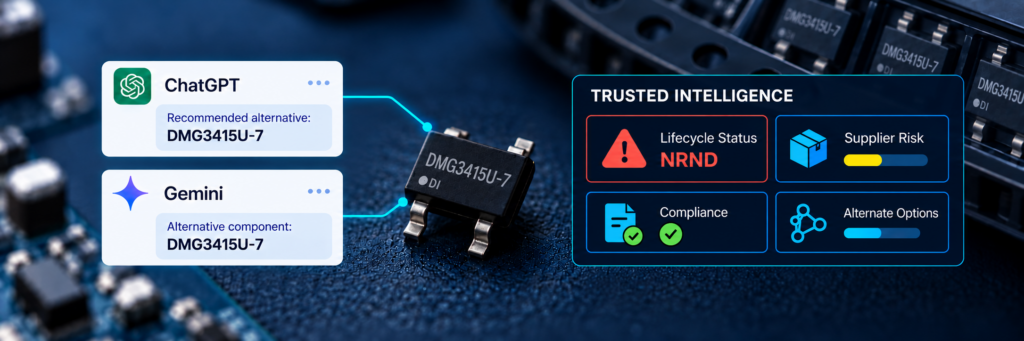
For example, if any parts in your supply chain flow through a factory site within an impacted zone, SiliconExpert can identify them, alert you to risk, and provide alternative components so you can take data-backed action for sourcing, procurement, and continuity planning.

Use SiliconExpert to know exactly which parts and suppliers may be affected — and safeguard your supply chain with Trusted Intelligence.
Request your free trial today for enhanced supply chain visibility to navigate this disruptive event with clarity.